RotoGrinders Daily Fantasy
- 4.7
- Rating
- 50.00K
- Installs
- Free
- Price

 Analysis by App-foxy
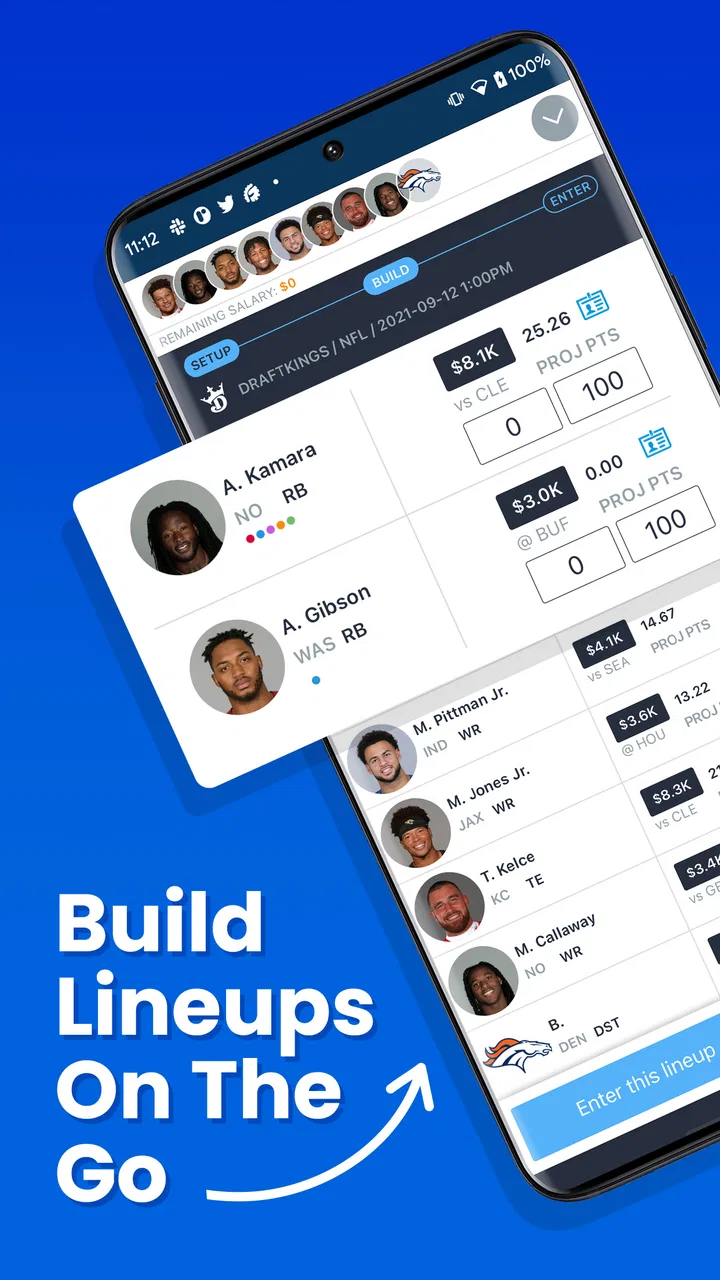
RotoGrinders Daily Fantasy is a sports app built for one particularly stressful part of fantasy contests: checking who is actually starting before you lock in a lineup. I found its purpose easy to understand from the first use. It is not trying to replace a full fantasy platform or become a general sports news reader. Its value is more focused: helping me keep track of roster changes when a late scratch, rotation decision, or starting confirmation can change the usefulness of a contest entry.
That narrow focus is also what makes the app worth considering. If you regularly play daily fantasy contests, the difference between planning around an expected starter and reacting to the confirmed lineup can matter more than spending extra time polishing a player list. RotoGrinders, developed by RotoGrinders, is designed around that moment of decision. I would describe it as a practical companion for contest preparation rather than a complete fantasy command center.
The app is free to install and sits in the Sports category, although it is marked Mature 17+. Its current version is 3.0.3, and it runs on Android devices using version 5.0 or later. The listing shows a 4.7 average from around 3.4 thousand ratings, with more than 50 thousand installs. Those figures suggest a specialized audience rather than a mass-market sports app, which fits my experience: this is most useful when fantasy contests are already part of your routine.
You May Also Like

 Pandora - Music & Podcasts
Pandora’s Music Is Easy to Start, but Harder to Recover
Pandora’s strength is its low-effort path from a seed to a station. Its weak spot is how much confidence it asks you to place in connection, setup, and quiet recovery.

 AccuWeather: Weather Radar
AccuWeather Review: A Quick, Clear Forecast for Everyday Decisions
For everyday plans, the best forecast is the one you can understand quickly. AccuWeather makes rain timing, radar, and local conditions easy to act on, with a few trade-offs.

 Hill Climb Racing
Why Hill Climb Racing Still Turns Crashes Into One More Run
A tiny car, a bumpy hill and one more upgrade: Hill Climb Racing keeps resurfacing because its simple chaos makes every near-miss feel personal.

 AliExpress - Shopping App
AliExpress Makes Global Shopping Feel Personal, but Shoppers Bear the Risk
AliExpress turns a global marketplace into a pocket-sized discovery engine. Its reach is useful, its shopping loop compelling, and its trade-offs easy to miss.

 Lords Mobile: Kingdom Wars
Lords Mobile Is a Kingdom-Building Routine, Not a Quick Match
A case-by-case verdict on the building, battles, device demands, and social commitments that make Lords Mobile rewarding for some players and exhausting for others.

 PDF Scanner app - TapScanner
TapScanner Makes Paperwork Easier to Capture, Check, and Share
TapScanner makes scanning with a phone feel less like a rescue operation and more like a dependable step in getting work done. Its capture tools are useful, though not flawless.
More From Our News Desk
View All News


How RotoGrinders feels during lineup preparation
I use lineup preparation as a chance to narrow my attention, not to make every fantasy decision at once. The useful first step is to identify which players and entries could be affected by a starting change, then check those priorities before moving on to broader research. That keeps the final review manageable and makes it easier to distinguish a genuine roster concern from routine pre-game noise.
Speed expectations when decisions are time-sensitive
The most important performance question here is not whether the app feels like an entertainment app with elaborate screens. It is whether I can open it, find the relevant sport or contest context, and use the lineup information before my decision window closes. For that job, a focused tool has a natural advantage over a broad sports application filled with scores, videos, articles, and social features.
I would still avoid treating it as a substitute for checking the final status of a contest on the fantasy platform itself. Lineup information is useful for preparation, but the actual entry, roster lock, and contest rules belong to the service where you are playing. My preferred workflow is to use RotoGrinders to organize my attention, then confirm the final action in the fantasy app. That extra check is sensible whenever timing is tight.
A good way to use it is to review the slate earlier, identify the games that are likely to produce late decisions, and return near contest lock rather than repeatedly opening the app without a plan. This reduces wasted tapping and makes the app’s focused purpose more valuable. I also find that lineup monitoring works best when I already know which contests I care about; otherwise, the amount of information can become another source of distraction.
The app’s strength is therefore perceived responsiveness in a narrow workflow, not raw speed as a headline feature. It helps me move from “I think this player will be involved” to “I need to check whether that player is actually starting.” That distinction is especially useful for people who build several lineups and cannot afford to inspect every team manually through unrelated sports coverage.
What happens during heavy-use moments
The busiest period for this kind of app is naturally close to game time, when many users are checking starting rosters at once and late news has the greatest practical impact. That is also when I would be most demanding. A lineup tool can feel excellent during a quiet afternoon and much less useful if refreshing or navigating becomes awkward during the final minutes before a contest closes.
I would approach those moments with a prepared shortlist. Instead of opening the app for the first time at the last second, I would decide earlier which leagues, games, or players deserve attention. Then the app becomes a confirmation tool rather than a frantic research session. This is one of the less obvious advantages of a specialized lineup app: it can reduce the number of places I need to search, but only if I use it as part of a repeatable routine.
Another practical trade-off is that lineup information does not eliminate judgment. A confirmed starter may still have a difficult matchup, a limited role, or a price that makes the selection unattractive. RotoGrinders can help me avoid an obvious roster mistake, but it cannot turn every starting player into a good fantasy choice. I still need to compare the information with the contest format, salary structure, and risk level I am targeting.
For multi-entry players, the app is most helpful as a late review layer. I can use it to identify entries that depend too heavily on a player whose role has changed, then adjust those lineups in the appropriate fantasy platform. For a casual player entering one contest, the benefit is simpler: check the starting information before committing instead of relying entirely on an old projection or an assumption from earlier in the day.
Reliability and the cost of missing a change
Reliability matters more here than visual polish because the app’s purpose is tied to changing sports information. I would judge it by whether it helps me build a habit of checking confirmed roles, not merely by how attractive the interface looks. A stable experience is valuable, but the information also needs to arrive in a way that is clear enough to act on quickly.
I recommend treating any lineup alert or update as a prompt to investigate, not as permission to make an automatic decision. Sports situations can change quickly, and a starting designation is only one part of the fantasy picture. When I use a tool like this, I want it to narrow the uncertainty, while I keep responsibility for the final roster choice.
That distinction protects against one common mistake: assuming that a lineup app is a guarantee. It is better understood as an information aid. If I am entering a contest with a strict lock time, I would check the fantasy site immediately after reviewing the app. I would also avoid waiting until the final possible moment, because even a reliable tool cannot help if I leave no time to make the change.
The developer’s established focus on fantasy sports gives the app a clear identity, and the strong average rating indicates that many users find that identity useful. Still, I would not recommend relying on any single source for high-stakes decisions. The sensible approach is layered: use the app for roster awareness, verify the contest status where you play, and keep a backup plan for a player whose role remains uncertain.
Device constraints and everyday practicality
Because the app supports Android version 5.0 and later, it is available to people using older devices as well as newer phones. That broad compatibility is helpful if you keep a secondary phone for sports or do not upgrade frequently. At the same time, compatibility alone does not tell me how every device will behave under pressure. Older hardware, limited free storage, or an overloaded background setup can make any information app feel less comfortable during rapid checking.
I would prepare the phone before a busy slate by closing anything I do not need, keeping the battery in good shape, and making sure I can reach the fantasy platform quickly after reviewing a lineup. Those are simple steps, but they matter because the app is part of a time-sensitive chain rather than an isolated browsing experience.
Resource demands are also worth considering. RotoGrinders is a utility app, so I would not expect it to replace a game or a video-heavy sports service in terms of entertainment. Its practical footprint should be judged by how often I open it and how much other activity I keep running alongside it. If your phone already struggles with several sports, messaging, and fantasy apps open together, using one focused tool at a time is the safer workflow.
Recovery is another everyday concern. If I close the app accidentally or need to switch to another service, I want to be able to return to the relevant lineup check without losing the purpose of the session. My advice is to keep a short written or mental list of the games and players that matter. That way, reopening the app does not force me to reconstruct the entire research process from memory.
Who will get the most from it
The clearest audience is the daily fantasy player who already understands contest basics and wants a more disciplined way to monitor starting rosters. It is particularly suitable for someone who has been burned by a late inactive player, a surprising rotation decision, or a lineup built too early in the day. The app can help turn a vague “I should check again” intention into a repeatable part of contest preparation.
It is also useful for players who follow more than one sport or manage several contests during the same day. In that situation, manually browsing team pages and general news feeds can become inefficient. A dedicated lineup-focused tool gives the checking process a clearer job. I would not call it a complete research solution, but I do think it can remove a frustrating layer of manual searching.
On the other hand, someone who only plays occasional season-long fantasy may not need it. Traditional fantasy platforms already provide team news and roster management, and a casual user may find a separate app unnecessary. The same applies to readers who mainly want live scores, commentary, standings, or broad sports coverage. RotoGrinders is not the right choice if your priority is general sports entertainment rather than contest-specific preparation.
Newcomers should also understand the difference between information and strategy. The app may help answer “is this player starting?” but it does not automatically answer “should I use this player?” If you are still learning salary management, contest selection, ownership considerations, or risk balancing, you may benefit more from a broader educational resource or the tools inside your fantasy platform before adding a dedicated lineup monitor.
A realistic daily workflow
Imagine I am preparing for an evening slate after work. Earlier in the day, I have already made a rough list of players I might use. Before the contest deadline, I open RotoGrinders and focus on the teams connected to those players. If one expected starter is not in the confirmed group, I remove that player from my immediate plans instead of discovering the problem after the roster locks.
I then return to the fantasy platform, check the player’s eligibility and contest details, and decide whether the replacement fits my original strategy. If the replacement changes the salary balance or the overall risk of the lineup, I revisit the structure rather than making a rushed one-for-one swap. This is where the app earns its place: it improves the quality of the final check, but it does not pretend that every change has an obvious answer.
For a larger set of entries, I would repeat the process by prioritizing players who appear in many lineups. That is a more efficient use of time than checking every selection equally. A late status change affecting one heavily used player deserves immediate attention, while a player included only as a small speculative option may not justify the same level of disruption.
After making changes, I would perform one final review in the fantasy service itself. This protects against the practical errors that can happen when switching between apps: editing the wrong lineup, overlooking a salary difference, or assuming a change was saved. The best use of RotoGrinders is not to add more steps for their own sake, but to make the important step—the final roster check—more deliberate.
How it compares with usual alternatives
The usual alternative is to depend on the fantasy platform, a general sports news app, or team and league pages. The fantasy platform is convenient because it is where the decision happens, but its lineup information may be mixed with many other roster-building tools. General sports apps offer broader context, yet they can require more searching before I reach the specific starting information I need.
RotoGrinders occupies a useful middle ground. It is more focused than a general sports reader and more independent than the lineup screen inside a single contest platform. That independence can be helpful when I play across different fantasy services or want to check roster news before opening each contest. The trade-off is that I still need the fantasy platform for the actual entry and final validation.
Compared with simply following social media or manually searching the web, a dedicated app can make the habit less scattered. However, manual sources may provide richer explanations when a player’s status is complicated. If I need to understand why a role changed, not just whether someone is starting, broader reporting may be the better companion. I see RotoGrinders as the fast checkpoint, not the entire news investigation.
The in-app purchase range runs from around ten dollars to around one hundred twenty dollars per item. That makes it important to think about value before paying for anything. A frequent player who saves time across many slates may see a benefit, while a casual user should be cautious about spending beyond the free experience. I would first establish that the lineup workflow genuinely improves my decisions before considering any optional purchase.
Practical limitations I would keep in mind
The biggest limitation is scope. Starting-roster awareness is valuable, but it cannot replace projections, matchup research, contest analysis, bankroll discipline, or the roster controls of the service where you play. If you expect one app to guide every fantasy decision, this will feel incomplete. I actually prefer that it has a defined job, but that means I need to pair it with other tools when my research becomes more advanced.
Another limitation is timing pressure. The closer I wait until lock, the less room I have to recover from an unexpected change. Even a straightforward lineup update can lead to a chain of decisions involving salary, position eligibility, and lineup correlation. The app can make the first discovery easier, but it cannot create extra time. Building an earlier review into my routine is essential.
The mature age classification also matters. This is not an app I would recommend treating as a general family sports utility, particularly because its purpose is connected to daily fantasy contests. Adults should also keep their own limits in mind. Information that improves a lineup does not guarantee a winning result, and no amount of checking removes the financial risk associated with contests.
Finally, users who dislike switching between apps may find the workflow inconvenient. RotoGrinders helps with awareness, but the final action still happens elsewhere. For me, that separation is acceptable because it keeps the app focused. For someone who wants an all-in-one fantasy dashboard, a platform with integrated news and roster management may be more comfortable.
My performance verdict
After looking at the app through the lens of speed, heavy-use periods, reliability, and device practicality, I see RotoGrinders Daily Fantasy as a focused utility with a sensible place in a serious player’s routine. Its strongest contribution is not flashy performance; it is reducing the chance that I build around a player whose starting status has changed. That is a small task with potentially large consequences at contest time.
I would recommend it to regular daily fantasy users who want a dedicated roster check, especially those managing several lineups or playing across more than one fantasy service. I would skip it if I only wanted scores and sports news, if I rarely enter contests, or if I expected complete strategy guidance from a lineup-focused app.
The free entry point makes it reasonable to test the workflow without committing immediately. I would install it, use it during a few normal contest days, and judge whether it makes my preparation calmer and more consistent. If I still end up relying on unrelated news feeds or forgetting to verify the final roster, the app has not yet earned a permanent place in my routine.
My final view is positive but measured: RotoGrinders Daily Fantasy is most valuable as a last-mile decision tool. It helps me catch the roster detail that can invalidate an otherwise carefully planned lineup, while leaving the broader fantasy judgment in my hands. Used that way, it is a practical sports companion rather than an exaggerated promise of guaranteed results.
FAQs for RotoGrinders Daily Fantasy
01What is RotoGrinders Daily Fantasy, and what can I use it for?
RotoGrinders Daily Fantasy is designed to help daily fantasy sports players research contests, compare player information, and make more informed lineup decisions. It typically brings together projections, analysis, expert advice, contest details, and strategy content for sports such as football, basketball, baseball, hockey, and other supported leagues. It is mainly a research and planning tool, rather than a guaranteed way to win contests.
02Does RotoGrinders Daily Fantasy let me enter daily fantasy contests directly?
The app’s primary purpose is generally to provide daily fantasy sports information, tools, and analysis, while contest entry may depend on the available integrations, links, and supported operators in your location. You may need a separate account with a fantasy sports platform to create lineups, deposit funds, and join contests. Before downloading or relying on the app, check the current listing and regional availability because features can vary by country, state, sport, and operator.
03Is RotoGrinders Daily Fantasy free to download and use?
RotoGrinders Daily Fantasy may offer free access to selected articles, projections, news, or basic research features, but some advanced tools, premium content, lineup products, or expert resources can require a subscription or additional payment. The exact pricing and included features may change over time. Review the app-store description and any in-app subscription screen carefully, especially the renewal terms, before starting a trial or purchasing premium access.
04Which sports and fantasy platforms are supported?
Supported sports and fantasy platforms can change according to the season, available data, licensing arrangements, and your location. RotoGrinders commonly focuses on major daily fantasy sports, but not every sport, contest type, or operator will necessarily be available at all times. If you have a specific league or platform in mind, confirm that it appears in the current app version before downloading, since regional restrictions and temporary coverage changes may affect the available research tools.
05Can RotoGrinders Daily Fantasy guarantee profitable lineups or winning results?
No fantasy sports app can guarantee winning lineups or consistent profits. RotoGrinders Daily Fantasy can help organize research by offering projections, statistics, news, analysis, and strategy guidance, but outcomes still depend on player performance, contest selection, injuries, late lineup changes, ownership trends, and chance. Use the information as a decision-making aid, set a budget, and only participate in contests where daily fantasy sports are legal and permitted in your jurisdiction.
Pros
- Detailed player projections help guide lineup decisions.
- Contest analysis tools make it easier to compare fantasy formats.
- Supports research across several major daily fantasy sports.
- Useful for tracking value plays and late lineup changes.
- Clean layout keeps essential fantasy information easy to find.
Cons
- Many advanced tools require a paid subscription.
- Coverage and features can vary between sports and contests.
- Projections are not guaranteed and may change close to lock.
- The amount of data can feel overwhelming for beginners.
- Some features depend on third-party fantasy platforms and account access.

RotoGrinders Daily Fantasy
Gallery